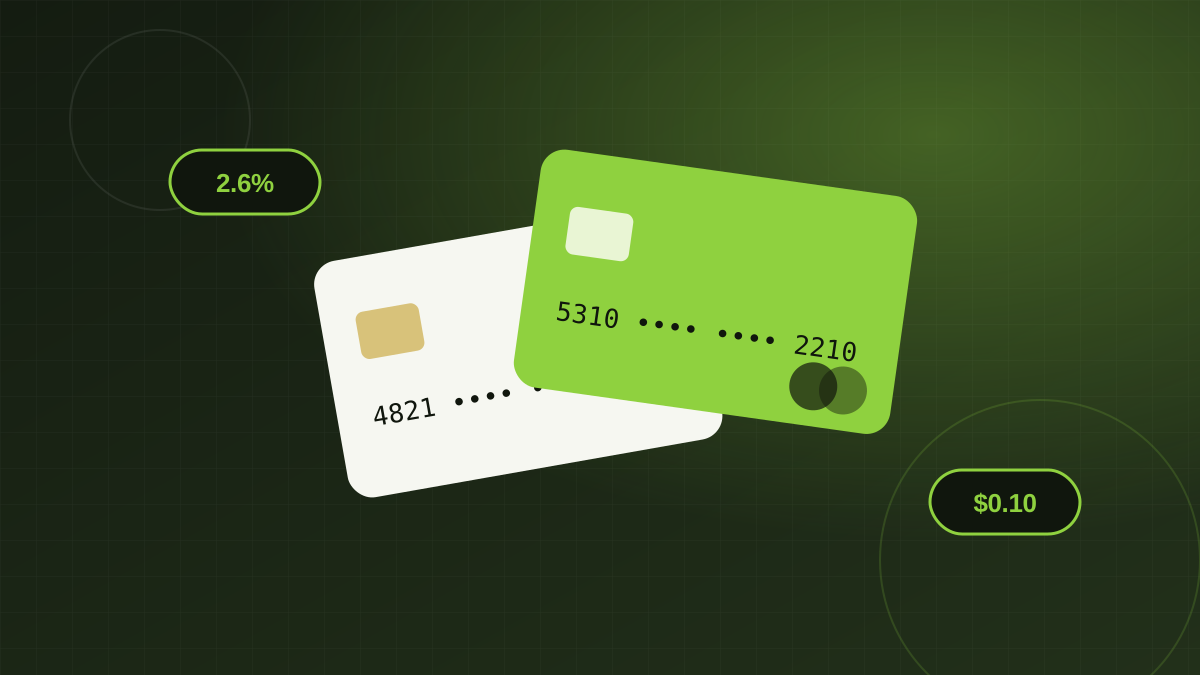
When you accept a card, three parties take a share: the card-issuing bank, the card network, and your processor. How your processor bundles those costs into a price is called the pricing model — and it changes what you pay more than almost anything else.
What is flat-rate pricing?
Flat-rate pricing charges one percentage (and often a fixed cents amount) on every transaction, whatever the card. It's the model used by many all-in-one apps and POS systems.
Why people like it: it's simple and predictable. You always know the rate.
The catch: every card costs a different amount to accept. A basic debit card costs far less than a premium rewards card. With flat-rate pricing you pay the same on all of them — so on your cheaper transactions, you're paying well above cost.
What is interchange-plus pricing?
Interchange-plus passes through the actual cost of each card — the interchange fee set by the card networks, plus their assessment fees — and then adds a fixed, disclosed markup from the processor.
Why it's popular with growing businesses: you see exactly what each card cost and exactly what your processor earns. When your customers use lower-cost cards, you pay less automatically.
The catch: statements are longer, because every card type is itemised.
Which pricing model is cheaper?
It depends on your volume and card mix:
- Very low volume or occasional sales: flat-rate can be fine — simplicity is worth something when the dollars are small.
- Steady monthly volume: interchange-plus usually works out lower, because you stop overpaying on low-cost cards.
- Lots of debit cards or small tickets: interchange-plus tends to benefit most, since those cards are the cheapest to accept.
How do I know which model I'm on now?
Look at your statement. If every transaction shows the same percentage, you're on flat-rate. If you see "qualified", "mid-qualified" and "non-qualified", you're on tiered pricing — the least transparent model of all. If you see interchange categories listed with a separate markup line, you're on interchange-plus.
What's the fastest way to compare?
Calculate your effective rate (total fees ÷ total card sales). Our free fee checker does it in a minute and tells you whether that rate looks high for your type of business. If it does, a side-by-side comparison of your current pricing against an interchange-plus setup shows the difference in plain English.